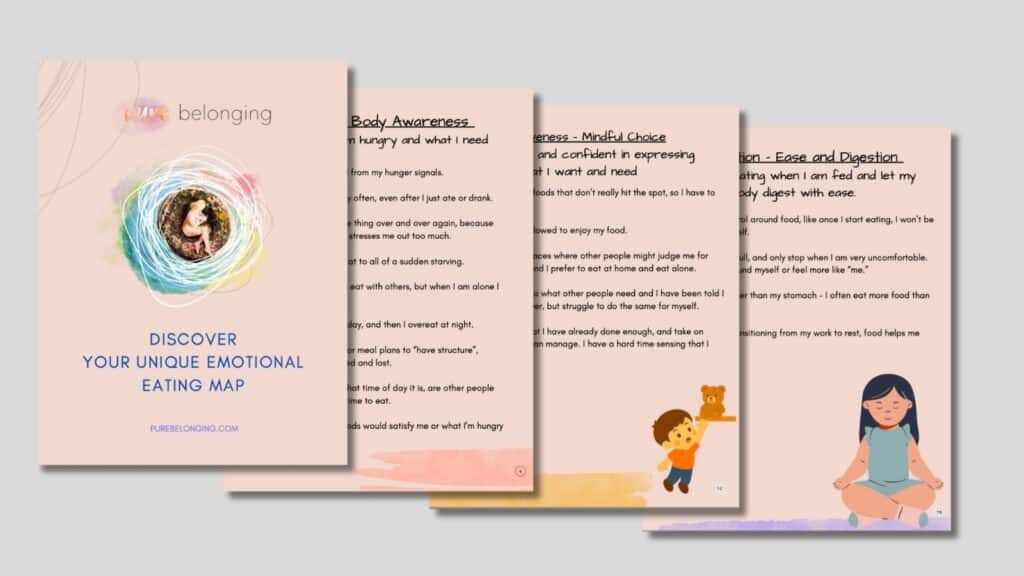
FREE SELF-ASSESSMENT
DISCOVER YOUR UNIQUE
EMOTIONAL EATING MAP

- For many people is not enough interrupt cravings and analyze behaviors, those are simply the tip of the iceberg.
- To address the true body-based, neurophisiological reasons for emotional eating, we need to go to the roots of what the body is expressing through emotional eating.
- My work with disordered eating has shown me that our bodies aren’t a problem, and that eating patterns are non-verbal ways to communicate needs that have no way to come to conscious awareness
- If you are ready to go beneath surface approaches to emotional eating, if you are ready to know yourself better, and treat yourself with exquisite tenderness and support when you most need it – this tool is for you
Here is something I’ve discovered over the past ten years of working with people who struggle with emotional eating:
Emotional eating only looks like a barrier to well-being when we don’t understand it.
When we do understand it, it often becomes the doorway to the most compassionate, meaningful and nourishing self-care we’ve ever known.
My intention here is to help you truly understand your own patterns, so you can learn how to support your body and find your own unique path to peace with food.
If you find yourself eating when you’re stressed, lonely, bored, or overwhelmed…
If you feel disconnected from your body’s signals and stuck in your head around food…
You are not alone.
Many of us learned to rely on food to ease pain, to comfort ourselves, to numb difficult emotions, or simply to get through the day. And then, on top of that, we often feel flawed or ashamed for turning to food at all.
So we try to fix it.
We enter the cycle of diets, rules, control, structure, and discipline, with the hope that this time it will finally work.
For bodies that have lived through overwhelm, shock, chronic stress, or trauma, this approach rarely brings relief. You need more. And not just more, you need better.
Decades of diet culture and a good 10 years of nervous system hacking approaches have done massive disservice to those of us who struggle to relate to food in ways that are gentle, nourishing and aligned with our values.
We have been given worksheets, habit tracking apps, zero to ten rating of fulness cues, told to splash ourselves with cold water, and jump into ice baths – without much care about the body itself – how did each individual body organize to make sense of the world it developed in, and how each of us had to make life in a body.
Maybe those work for some people, but they never worked for my clients and students.
Their bodies were not suffering from lack of willpower or the wrong food plan.
They were suffering from the biological aftermath of trauma imprints and survival adaptations.
It is simply not true that it’s easy to eat – just eat this, or eat like that.
For a body that has developed in scarcity, overwhelm, in lack of emotional comfort, in deprivation of love – protection becomes more important than relaxation and connection – and that makes not just food, but taking anything in very difficult.
People with complex histories find it difficult to know what they need, to trust your body’s signals, or to meet their needs with ease. This is only logical, but when the whole world is pretending that there is some kind of universal normal, it is easy to feel like you are the only one broken, that you are on the outside looking in, that everyone else gets to just eat, and you can’t figure this one simple thing out.
And this is important to hear:
Your struggle is not a mistake. And it is not your fault.
Your body and biology are profoundly intelligent. Even the behaviors that cause you pain are not random, they are pointing toward both the source of distress and the pathway toward healing.
You don’t have to live in fear of the next emotional eating episode taking over your life.
I know that may sound hard to believe ,but there is a way forward, and it’s likely not what you’ve been trying.
What if you could understand exactly why you get stuck in cycles of emotional eating, restriction or constant food noise?
As a somatic practitioner whose work centers on helping nervous systems recover, I teamed up with my teacher and mentor Rachel Lewis and created this short self-study guide to help you create your Unique Emotional Eating Map.
By completing this assessment, you will learn:
How to take the first realistic, body-based steps toward peace with food, using approaches that work with your biology rather than against it.
Why emotional eating, restriction, or food preoccupation developed in the first place — not as a flaw, but as an intelligent survival response shaped by your nervous system and life experiences.
How your body communicates its needs, especially if stress, trauma, or overwhelm have made those signals confusing or hard to hear.
Where your nourishment cycle gets interrupted, so you can see exactly what is getting in the way of ease with food — instead of guessing or blaming yourself.
What your body actually needs in those moments, beyond control, discipline, or willpower.
This is a somatic approach, one that looks at how your nervous system states shape your relationship not only with food and emotions, but with self-care, choice, rest, pleasure, and receiving support.
As you move through the assessment, you’ll uncover where your natural nourishment cycle is interrupted and what your body needs to restore balance, so you can meet your needs with more ease, joy, and satisfaction.
Along the way, I’ll offer reflections and gentle somatic tools to help you reconnect with your body, so you can understand its signals, take nourishing action, and remember what it feels like to truly savor your food and finish a meal feeling settled and at peace.
Emotional eating only looks like a barrier to well-being when we don’t understand it.
When we do understand it, it often becomes the doorway to the most compassionate, meaningful and nourishing self-care we’ve ever known.
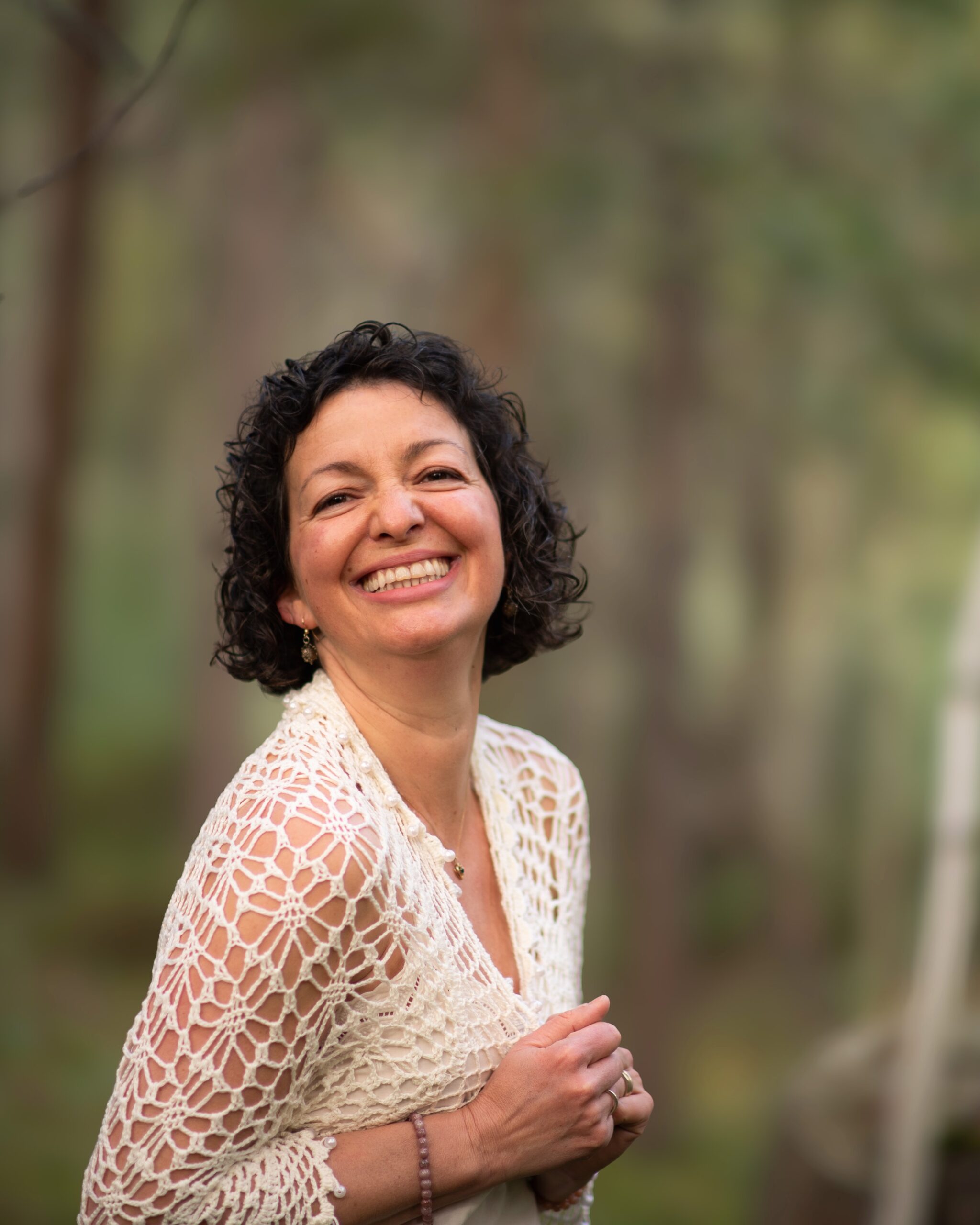
Galina Denzel is a Somatic Experiencing, a Neuroaffective Relational Model Practitioner, a Somatic Practice Practitioner and a student of Embodied Recovery for Eating Disorders (currently Tier 3).
She is also trained as a Nutritious Movement Restorative Exercise Specialist and multiple other healing movement modalities that she’s needed to support clients and students with chronic pain and complex conditions.
She teaches the Peace with Self, Peace with Food method in small groups, workshops and retreats.
Her personal story healing from her own eating and body image disorder combined with her knowledge and experience as a trauma oriented somatic practitioner make her work inspired, compassionate, and deeply transformative.